logo
Achievers Automation Limited

성취자는 당신의 모든 욕구를 성취할 수 있게 만듭니다!

뉴스

Level Measurement in Instrumentation: Technologies, Applications, and Implementation Guidelines for Industrial Processes

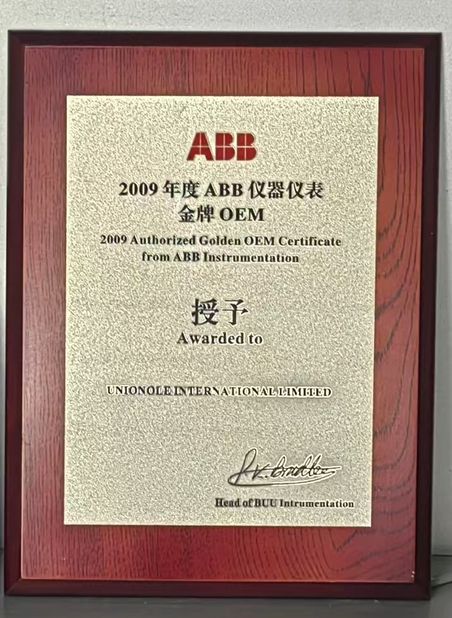
인증
중국 Achievers Automation Limited 인증
고객 검토
구매 관리자로서 저는 가격에 매우 민감합니다. 귀사의 제품은 뛰어난 품질을 놀랍도록 경쟁력 있는 가격으로 제공하여 시장에서 상당한 이점을 제공합니다. 특히 복잡한 물류 요구 사항을 처리하는 데 있어 뛰어난 전문성과 인내심을 보여주며 상품이 제때 도착하도록 보장해 준 서비스 팀에 감사드립니다.

—— Ari Wibowo 씨 - 구매 담당자

귀하의 제품 품질의 안정성과 내구성은 저희의 최우선 과제이며, 귀하의 제품은 저희의 기대를 훨씬 뛰어넘었습니다. 특히 라호르의 더운 기후에서도 훌륭한 성능을 보여줍니다. 처음에는 가격에 매료되었지만, 저희의 장기적인 파트너십을 확고하게 한 것은 귀사의 완벽한 A/S 서비스입니다. 기술적인 문제는 모두 해결됩니다.

—— Mr. Ahmed Raza-Operations Dire

귀사의 전문적인 서비스 수준은, 초기 의사 소통부터 최종 납품까지, 정말 인상적이었습니다. 그들은 리야드에서 우리 프로젝트의 긴급성을 깊이 이해하고 있었습니다. 당연히 최고 수준의 서비스는 최고 수준의 제품으로 뒷받침되어야 하며, 귀사의 제품 품질은 우리의 높은 기준을 충족하고 초과합니다. 고려할 때

—— 칼리드 씨 - 프로젝트 디렉터

제가 지금 온라인 채팅 해요
회사 뉴스
Level Measurement in Instrumentation: Technologies, Applications, and Implementation Guidelines for Industrial Processes
에 대한 최신 회사 뉴스 Level Measurement in Instrumentation: Technologies, Applications, and Implementation Guidelines for Industrial Processes


Introduction to Level Measurement in Industrial Instrumentation

Level measurement is a fundamental parameter in industrial instrumentation, referring to the determination of the height or volume of substances (liquids, solids, or slurries) in tanks, vessels, or silos. This process is critical for inventory management, process control, safety assurance, and operational efficiency across industries such as oil and gas, water treatment, chemical processing, and pharmaceuticals. Level measurement systems can be broadly categorized into two types: continuous measurement, which provides real-time level data over a range, and point-level detection, which activates alarms or controls when levels reach specific thresholds. Modern level instrumentation integrates sensors, transmitters, and communication protocols (e.g., 4–20 mA, HART, PROFIBUS) to enable seamless data transmission to control systems, supporting automation and predictive maintenance strategies. The selection of an appropriate level measurement technology depends on factors like substance properties, environmental conditions, accuracy requirements, and cost constraints .

Operating Principles and Key Technologies

Level measurement technologies leverage diverse physical principles to address varying application needs. Hydrostatic pressuretransmitters calculate level by measuring the pressure exerted by a liquid column, suitable for corrosive or viscous fluids but requiring density compensation . Ultrasonicand radarsensors use time-of-flight principles, with ultrasonic devices emitting sound waves and radar employing electromagnetic waves for non-contact measurement; radar excels in dusty or vaporous environments, while ultrasonic systems are cost-effective for clean liquids . Capacitivesensors detect level changes by measuring capacitance variations between a probe and vessel wall, ideal for liquids, solids, and slurries but vulnerable to material coating on probes . Float-basedand magnetostrictivetechnologies provide reliable point-level detection or continuous tracking via mechanical linkage or magnetic field interactions, respectively . Advanced methods like guided wave radar(GWR) combine radar with probe guidance for challenging media, and laser level sensorsoffer high precision for transparent liquids . Each technology has distinct advantages: non-contact methods avoid contamination, while contact designs like displacers handle high-pressure/temperature environments .


Key Application Scenarios

Level measurement instrumentation addresses unique challenges in different sectors. In the oil and gas industry, radar and hydrostatic transmitters monitor crude oil in storage tanks, with GWR used for interface detection between oil and water, ensuring safety and compliance . Water and wastewater treatmentfacilities rely on ultrasonic sensors for open-channel flow measurement and chemical dosing, while capacitive switches prevent pump dry-running in sumps . The chemical processingsector uses corrosion-resistant radar transmitters for reactor level control and capacitive sensors for abrasive slurries, prioritizing accuracy in aggressive media . Food and beverageapplications employ sanitary radar or ultrasonic sensors for ingredient mixing and packaging, with hygienic designs allowing clean-in-place (CIP) sterilization . In mining and solids handling, vibrating fork switches and laser sensors manage granular materials in silos, avoiding buildup issues . Additionally, pharmaceuticalapplications use non-invasive optical sensors for precise batch processing in sterile tanks .

Selection Criteria and Implementation Best Practices

Selecting the right level measurement technology requires evaluating multiple parameters. Substance properties like conductivity, viscosity, and dielectric constant determine suitability—for example, radar works well for low-dielectric materials, while magnetic level gauges suit conductive liquids . Environmental conditions such as temperature extremes (e.g., -40°C to 400°C), pressure ratings (up to 400 bar for radar), and presence of foam/dust influence technology choice; radar outperforms ultrasonic in vaporous settings . Accuracy needs range from ±0.1% for custody transfer (e.g., magnetostrictive transmitters) to ±1% for basic process control . Installation constraints like vessel geometry and mounting options dictate sensor placement, with stilling wells mitigating turbulence in agitated tanks . Implementation best practices include calibrating for zero and span, using shielding for electronic sensors in noisy environments, and integrating diagnostics via IO-Link for predictive maintenance . For hazardous areas, certifications like ATEX/IECEx ensure safety .


Advantages, Limitations, and Emerging Trends

Each level measurement technology offers distinct benefits and constraints. Radar provides high accuracy (±0.5%) and reliability in extreme conditions but at a higher cost, while ultrasonic sensors are affordable but susceptible to environmental interference . Hydrostatic transmitters are cost-effective for liquids but require density compensation, and capacitive devices handle diverse media but need regular cleaning . Emerging trends include IIoT integration, where smart sensors with wireless protocols (e.g., WirelessHART) enable real-time data analytics and remote monitoring . Advanced diagnosticsin modern transmitters detect coating or probe faults, reducing downtime. Laser-basedand 3D imagingtechnologies enhance precision for solids and opaque fluids, and miniaturizationexpands applications in compact equipment . The shift toward digital twinsallows simulation-based optimization, improving lifecycle efficiency .

Conclusion: Enhancing Industrial Efficiency with Precision Level Measurement

Level measurement instrumentation is pivotal for modern industrial automation, combining precision, reliability, and adaptability to diverse applications. By selecting technologies aligned with specific needs—such as radar for harsh conditions or ultrasonic for cost-sensitive projects—industries can achieve optimal process control, safety, and sustainability. Future advancements in smart sensors and IIoT will further solidify the role of level measurement in data-driven industrial ecosystems .


-Endress+Hauser

-ALLEN BRADLEY 

-YOKOGAWA 

-MTL

-P+F

-More products  


에 대한 최신 회사 뉴스 Level Measurement in Instrumentation: Technologies, Applications, and Implementation Guidelines for Industrial Processes  0

Achievers Automation Limited has more than 10 years experience in the market of Industrial Automation, specialized in reselling factory sealed Probe, Sensor, DCS,isolator barrier, HMI, PLC,Adapter,Profibus connector and cable from Brands as BENTLY NEVADA, Endress+Hauser, YOKOGAWA,MTL,Allen-Bradley, Pepperl+Fuchs,Rosemount, ASCO, Schneider, Lenze, Pro-face, Mitsubishi, Omron, Lenze, Delta, Honeywell, Siemens and etc. If you have any request, please do not hesitate to contact us.


선술집 시간 : 2025-11-27 09:19:58 >> 뉴스 명부
연락처 세부 사항
Achievers Automation Limited

담당자: Ms. Caroline Chan

전화 번호: 13271919169

회사에 직접 문의 보내기 (0 / 3000)